
The Sandwich Generation: When “It’s Finally My Time” Becomes… Not So Fast
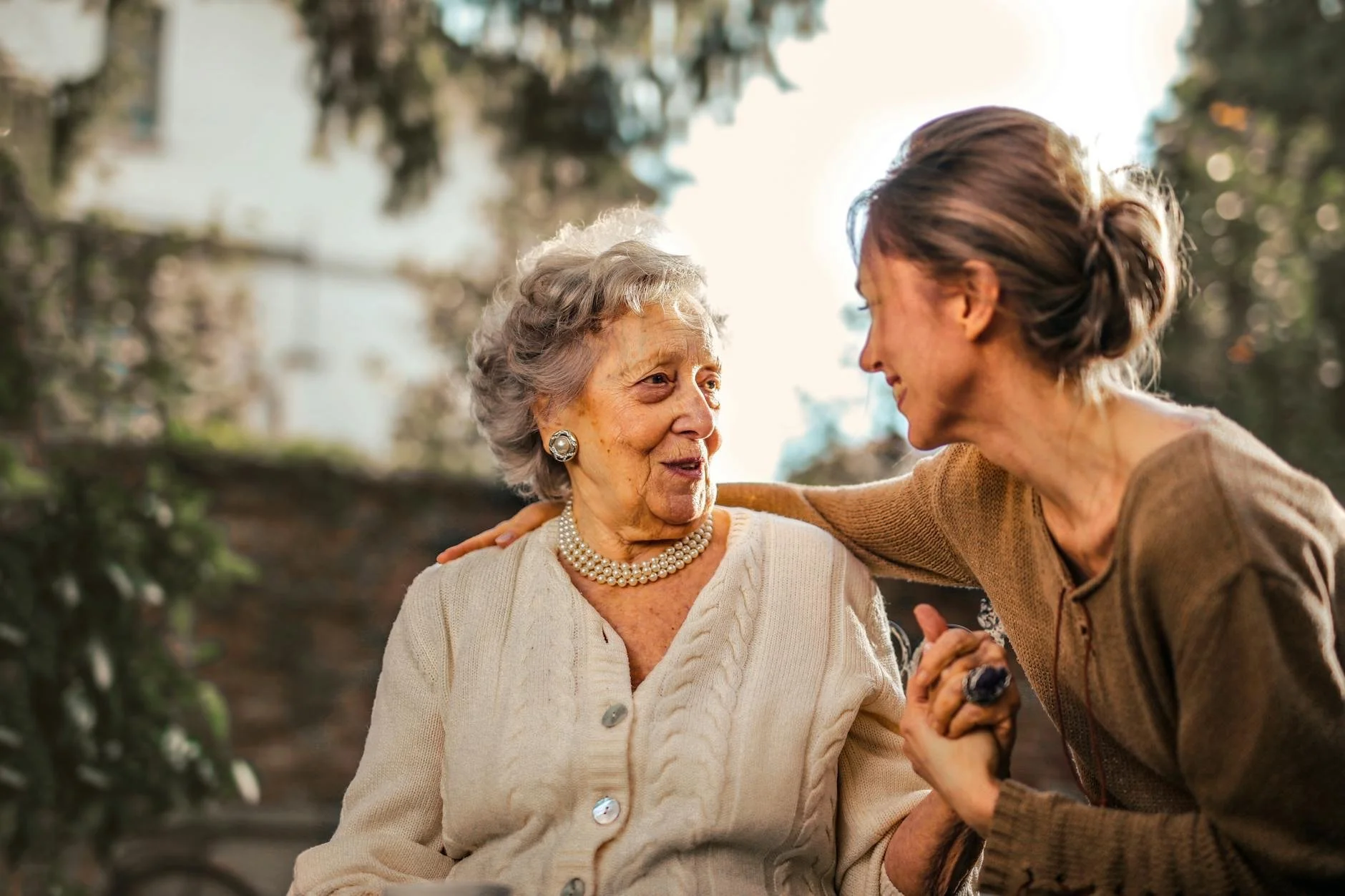
You finally have launched your kids and the last one is off to college. You breathe a sigh of relief and excitement — the next phase of your life is happening.
Wait… not so fast.
The daily (often multiple) phone calls from your parents begin. They need support and help managing their lives as their cognitive and physical health start to decline. Suddenly, you have this sinking feeling that you will never be able to focus on you — your dreams, your goals, your self-care.
Welcome to the sandwich generation — the generation that not only cares for their adult children who are launching (and let’s be honest, that path is rarely linear, with returns home and regressed behavior that are all too common), but now also finds themselves providing constant support and attention to elderly parents. Often, this phase eerily mimics the teenage years — a time you thought you were done with when the kids left home.
What Is the Sandwich Generation?
The sandwich generation refers to adults who are care taking the generations below and above them — often feeling squeezed for resources, time, and emotional energy, and stuck in constant care taking mode for both their children and their aging parents. It can feel like a never-ending revolving door, where everyone else’s needs are being met — but not your own.
This generation is primarily Generation X, followed closely by Baby Boomers. Research consistently finds that adults in their 40s and early 50s are the most likely to be actively supporting both children and aging parents. This is also the time of peak career responsibility, often with very limited flexibility.
Gen X, in particular, reports higher levels of time strain, emotional stress, and role overload compared to other age groups. This generation often feels invisible — too young to be considered “elderly caregivers,” and too old to receive meaningful support themselves — leading to chronic depletion and burnout risk. It also brings up concerns about their own health and aging, retirement uncertainty, and anticipatory grief.
Why This Phase Is So Mentally and Emotionally Exhausting
The challenges of caring for elderly parents while managing young adults are many — and they can take a serious toll on mental health, particularly for Gen X and Baby Boomers. These relationships are often complicated, especially when there were strained parental relationships or periods of estrangement, and now a parent requires ongoing care.
Many adults struggle to find the balance between loving and wanting to support their parents while also setting boundaries around how much they can realistically give — financially, emotionally, and with their time. It is an exhausting balancing act, often fraught with guilt, an undue sense of responsibility, and the feeling of being in an impossible position — unable to please anyone, including themselves.
What the Research Shows
A survey by Lei et al. (a nationally representative U.S. study of caregivers) compared sandwich-generation caregivers to non-sandwich caregivers and found that sandwich caregivers reported:
More substantial financial difficulty (23.5% vs. 12.2%)
More emotional difficulty (44.1% vs. 32.2%)
Higher caregiver role overload
A greater likelihood of working for pay while providing intensive care-giving hours
Additionally, Xue et al. (UK Household Longitudinal Study, 2009–2020, published in Public Health) found that sandwich care giving was linked to deterioration in mental health, as well as declines in physical health over time.
The sandwich generation isn’t just “busy” — it’s sustained responsibility in both directions.
There is increased stress because the life stage many expected to feel lighter and less burdened — often imagined as a time of greater freedom once children leave home — instead arrives with more responsibility and economic pressure. Rather than downsizing care, many find themselves providing multi generational financial and emotional support, often at a time when their own energy and reserves are stretched thin.
This collision of expectation and reality can bring a quiet but profound grief: mourning the life they had hoped for, dreams deferred or reshaped, and the realization that responsibility is increasing rather than easing. Over time, this sustained role strain frequently leads to emotional exhaustion, burnout, and a deep sense of invisibility, as their own needs are consistently placed last.
Clinical Perspective — and Some Real-Life Tips
As a clinician, I’ve found that people in the sandwich generation need more support than they realize, and often respond well to therapy during this extremely challenging phase of life. Common themes include learning how to set loving boundaries, prioritizing physical and emotional health, and feeling safe enough to express the many feelings that arise when caring for both adult children and aging parents.
Some helpful (and very real) tips:
Stop blaming yourself.
This is not about failing to prepare your children or your parents well enough. It’s not about something you did wrong. This is a developmental and societal stress collision — not a personal failure, weakness, or lack of coping skills.
It’s complicated.
Oh yes, it is. Even if you had a Leave-It-to-Beaver childhood with loving, wonderful parents, caring for aging parents is still hard. Add a complicated parent-child relationship, unresolved wounds, or sibling dynamics, and the stress increases exponentially. Old resentments resurface. Different ideas emerge about who should do what. One sibling often feels they’re doing “everything.” Yes — it’s complicated.
“No” is your new mantra.
Your emotional bandwidth is limited. You simply cannot keep the pace you once did — juggling adult children, aging parents, and a career. Gone are the days of powering through because that’s “just what you do.” Saying no allows you to recharge, re-calibrate, and protect your mental health. Do less. Carve out alone time. And yes — be “selfish” with your time. If it doesn’t feel good or nourishing, it’s okay to pass.
Say yes to self-care.
This isn’t indulgent — it’s essential. Prioritize what refills your bucket: massages, doing your nails, spin or barre class, dinner with friends, or a weekly glass of wine with people who let you be real. Take off the caretaking hat when you can. It matters.
Let it flow.
Cry. Scream. Feel overwhelmed. Allow all emotions. Martyrdom and toxic positivity (“I should just be grateful”) don’t earn gold stars — they lead to faster burnout. It’s okay to say, “Caring for my mom with dementia is hard, and I’m taking it one day at a time.” Realness heals. Pretending everything is fine does not.
Final Thoughts
One of the toughest jobs in the world — and one that no one truly understands until they’re in it — is care taking. Add raising children and caring for aging parents, and the risk for burnout is real.
Asking for what you need, prioritizing self-care, and honestly assessing how you’re doing can make all the difference. It’s okay not to know how to manage it all. It’s okay to seek outside help — whether that’s an additional caregiver, family support, or therapy.
I work with many adults navigating life while sandwiched between two generations and would be honored to support you through this phase. Please reach out if you’d like more information or to see if we might be a good fit.
